Zhanxi Yan

Zhanxi Yan

Computer Engineering @ UIUC & ZJU · Embodied AI & Robot Learning Systems
UIUC GPA: 3.95 / 4.00 ZJU GPA: 4.17 / 4.30 Seeking 2026/2027 AI & Robotics Internships
Focus: Robot Learning Systems · VLA Policy Evaluation · Physical Interaction Benchmarks · ML Infrastructure

Undergraduate engineer at the ZJU–UIUC Institute (Class of 2028). Building physical policy learning systems, VLA evaluation pipelines, and multimodal benchmarks for robotic decision-making.

RoboSteer: Benchmarking Behavioral Steerability in Behavior Foundation Models
arXiv Preprint
arXiv Preprint (arXiv:2610.10198, 2026)
RoboSteer preview
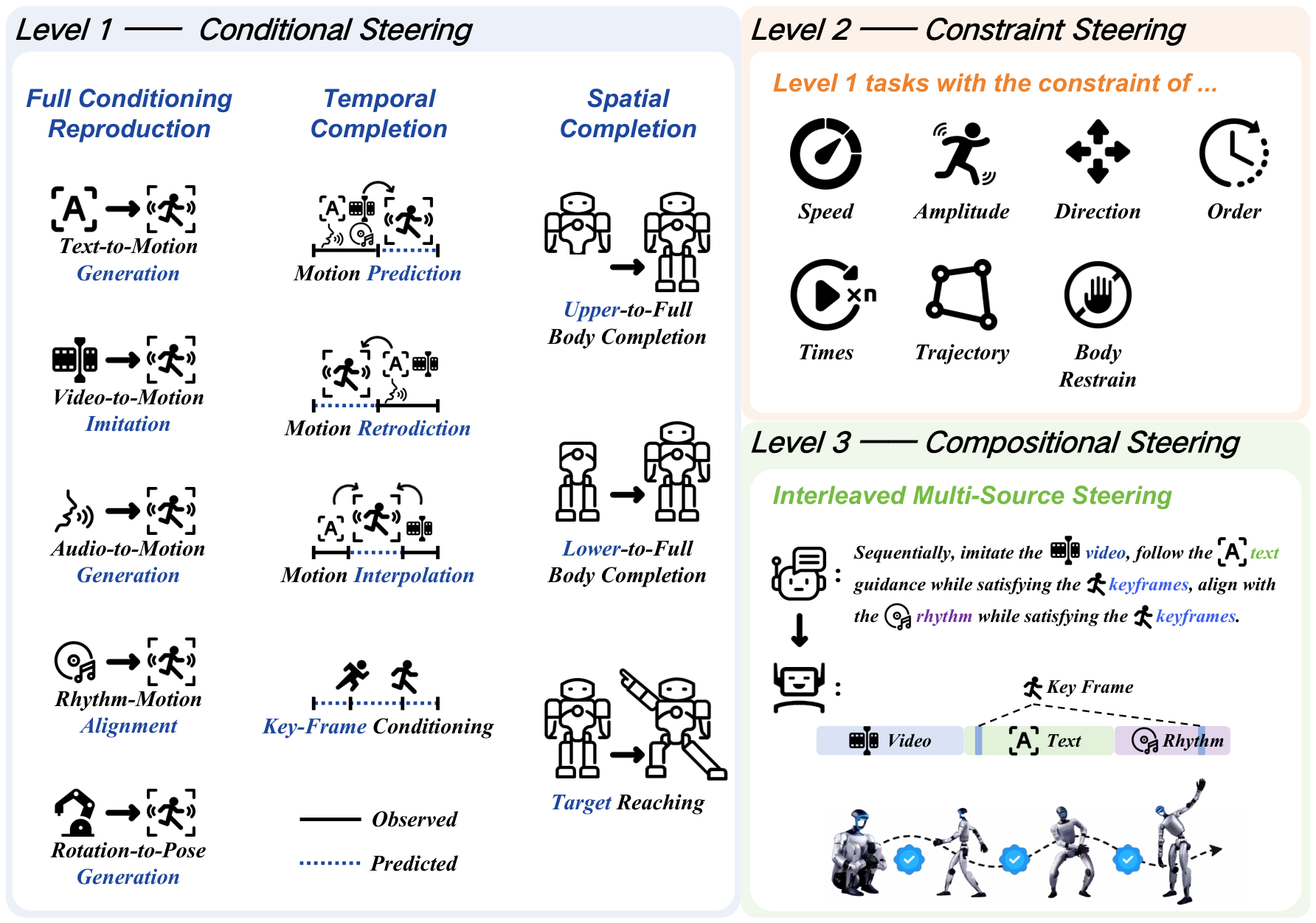
Three-level behavioral steerability hierarchy: Conditional, Constraint, and Compositional steering.

Unified steerability benchmark evaluating whether humanoid behavior foundation models faithfully follow diverse physical instructions across 14 tasks and multiple constraints.

Contribution: Second Author · Task Taxonomy & Multimodal Benchmark Curation

  • Co-authored arXiv 2026 preprint (2nd author), advised by Prof. Juncheng Li.
  • Formulated 3-level steerability hierarchy: Conditional, Constraint, Compositional.
  • Standardized multimodal evaluation samples for 773,716 tasks from 38,522 source motions.
SmolVLA–LIBERO: Language Sensitivity & Policy Robustness in Vision-Language-Action Models
Open Codebase
Experimental Study & Open Codebase (2026)
SmolVLA–LIBERO preview
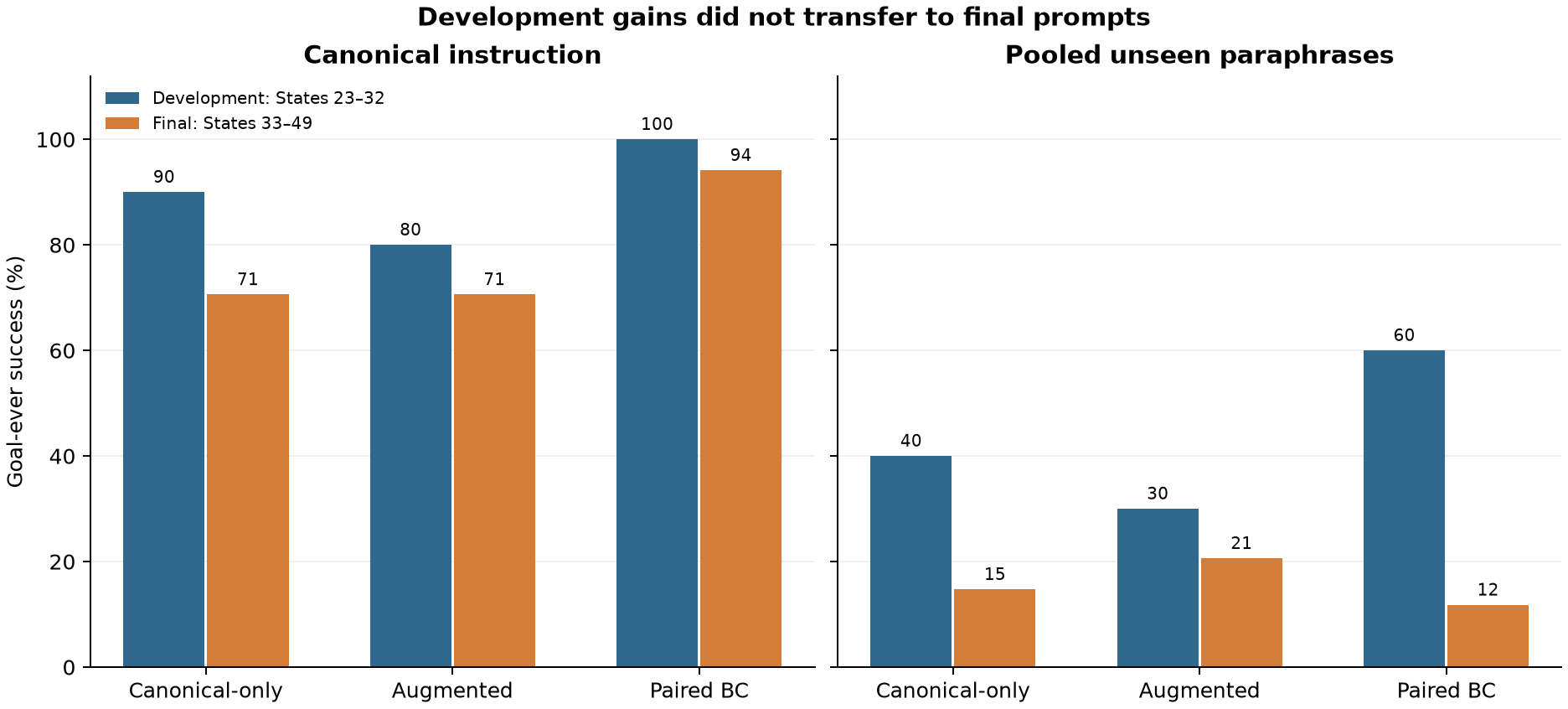
Empirical evaluation on LIBERO-Spatial: Paired BC gains did not transfer to unseen paraphrases.

Investigating whether vision-language-action policies are vulnerable to semantic instruction paraphrasing in closed-loop manipulation. Evaluates Paired BC and Flow Consistency on LIBERO-Spatial.

Contribution: Lead Researcher & Engineer (Independent Project)

  • Fine-tuned SmolVLA action expert with PyTorch/LeRobot on LIBERO-Spatial.
  • Implemented paired BC and frozen-teacher flow consistency with matched training controls.
  • Observed 94.1% canonical success (paired BC) vs. 70.6% (canonical FT); documented lack of transfer to unseen paraphrases (8% success in 75-rollout pilot).
PACE: A Progressive App Co-creation Environment for Complex App Design
ICIC 2026
ICIC 2026 · Springer CCIS / LNCS
PACE preview
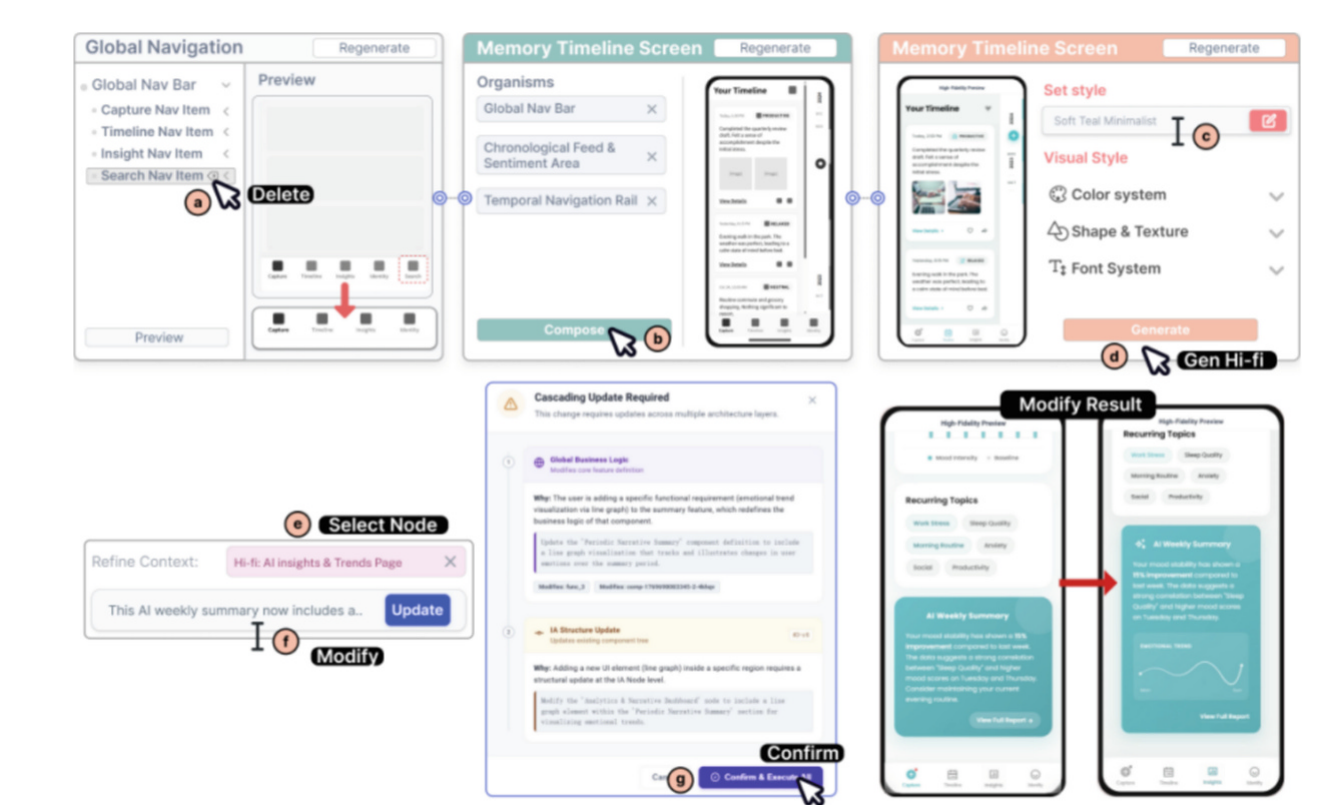
PACE progressive co-creation workflow from structural definition to high-fidelity UI synthesis.

Human-AI co-creation environment breaking complex app design into functional hierarchy, design system wireframes, and component interfaces to prevent black-box hallucination.

Contribution: Co-Author · GenUI System Implementation & Empirical Study

  • Co-authored ICIC 2026 paper (Springer LNCS), advised by Prof. Liuqing Chen.
  • Co-developed progressive GenUI web app with React, TypeScript, React Flow, and LLM prompting.
  • 16-participant user study vs. Google Stitch showed +19.4% design consistency and -27.4% time per screen.
Technical Skills

Machine Learning & Vision

Robotics & Simulation

Programming Languages

Development & Systems Tools

University of Illinois Urbana-Champaign

B.S. in Computer Engineering · Urbana, IL Aug 2024 – May 2028 (Expected)
Selected Coursework (all A/A+):
CS 225 Data Structures (A+) ECE 313 Probability (A+) MATH 257 Linear Algebra (A) MATH 213 Discrete Mathematics (A)

Zhejiang University (ZJU–UIUC Institute)

B.Eng. in Electronic & Computer Engineering · Hangzhou, China Aug 2024 – May 2028 (Expected)
Research Experience:
  • School of Software Technology, Zhejiang University Advisor: Prof. Juncheng Li · Multimodal benchmark development for behavior foundation models (RoboSteer, 773k tasks)
  • Information & Creation Interaction Lab (ICI Lab) Advisor: Prof. Liuqing Chen · Human-AI co-creation and progressive generative UI systems (PACE, ICIC 2026)